


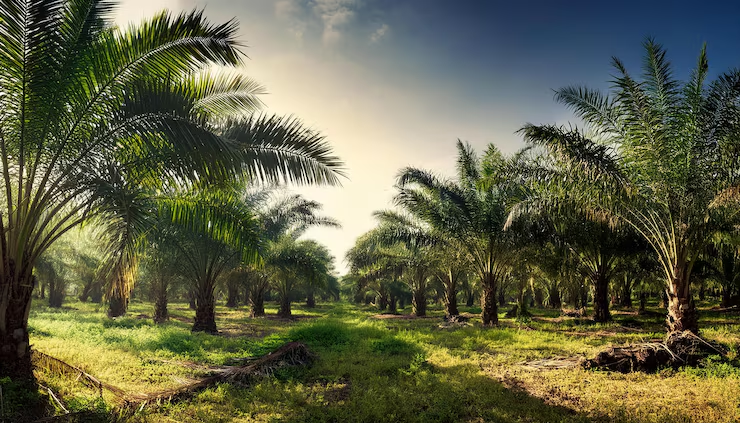
Not every inch of soil in Indonesia is naturally suited for oil palm cultivation. Although the crop is known for its resilience and serves as a premier national commodity, growing it successfully demands strict agroklimatological compatibility to prevent operational losses and land degradation.
Geographically and scientifically, oil palm thrives within a specific “comfort zone” of agroclimate:
Ideal Elevation: It grows optimally in lowlands up to an elevation of 400 meters above sea level (masl). Beyond this threshold, photosynthesis slows down due to cooler average temperatures.
Rainfall & Agroclimate: It requires an annual rainfall ranging between 2,000 and 3,000 mm per year with relatively even distribution, alongside daily temperatures between 24°C and 30°C.
Soil Characteristics: It requires soil structures with good aeration and drainage, moderate acidity, and sufficient effective depth (solum) to support a massive root system.
Enforcing oil palm cultivation outside its ideal agroclimatic zones—such as in high-altitude cool regions, areas with extreme dry seasons lacking adequate irrigation, or deep peat lands unsuited for conversion—will only result in low Fresh Fruit Bunch (FFB) productivity and inefficient fertilizer expenditures.
Modern precision agriculture demands that we act rationally: place commodities according to their ecological capacity rather than expanding indiscriminately without scientific calculation.
Tags: Indonesia, Palm Oil, Palm Oil Plantation


 Facebook
 Instagram
 Tiktok
 Linkedin