


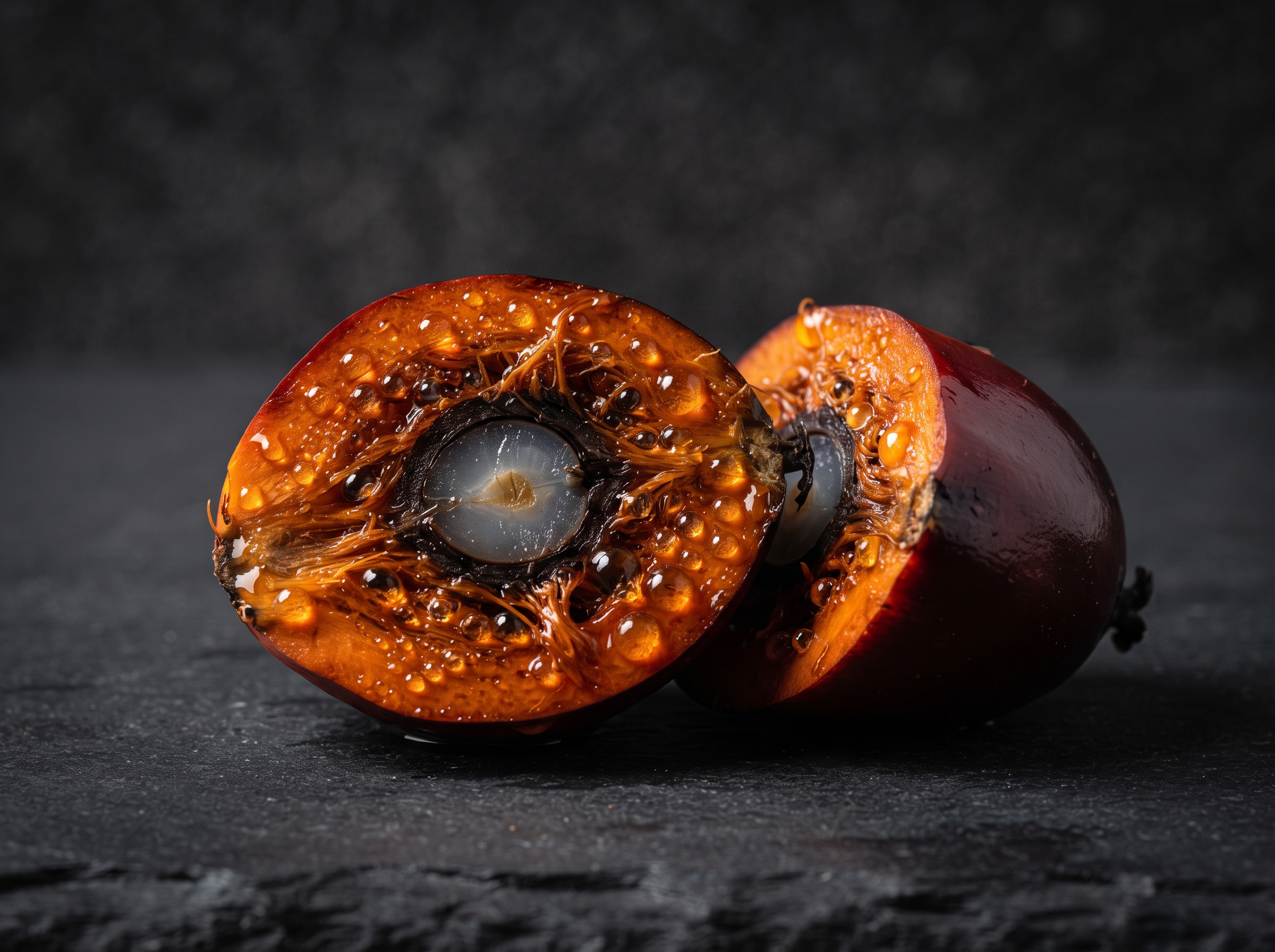
For decades, the global palm oil industry has viewed its output through a macro-economic lens: cargo tonnage, export volumes, and plantation acreage. Crude Palm Oil (CPO) has long been treated as a uniform bulk commodity—an industrial feedstock measured primarily by how many tons can be crammed into a cargo ship.
However, a deeper dive into modern biochemical laboratories reveals a radical shift in this narrative. Palm oil is no longer just a conventional vegetable fat. Deep inside its fruit mesocarp lies a complex molecular architecture that, when extracted with high precision, transforms into “Red Gold”: a high-value source of cellular nutrition rich in active vitamins and antioxidants.
How does a tropical fruit transition into advanced cellular nutrition? Let us dissect the journey layer by layer.
The Starting Point: Biological Wonders Inside the Mesocarp
The journey of Red Gold begins in the physical structure of the oil palm fruit, specifically the mesocarp (pulp). Unlike the kernel, which yields palm kernel oil, the mesocarp is naturally designed by nature to store high-energy reserves packed with phytonutrients.
In its natural state, fresh palm fruit contains high concentrations of provitamin A (carotenoids), vitamin E (tocopherols and tocotrienols), and other bioactive compounds that give raw palm oil its deep, vibrant red hue. The core challenge for over a century has been how to harvest this molecular wealth without destroying it along the way.
The Sins of Extreme Heat: Why Conventional CPO Loses Its “Gold”
In conventional palm oil processing mills, fresh fruit bunches are subjected to extreme heat using high-pressure steam sterilization for hours. The objective is straightforward: soften the fruit and deactivate degrading enzymes.
Yet, this is where industrial irony strikes:
Thermal Degradation: High temperatures and aggressive heating act as a “nutritional assassin.” Valuable compounds like carotenoids and tocotrienols suffer severe oxidation and structural degradation.
Loss of Natural Color: Due to extreme heat, the natural bright red color of these antioxidants is destroyed, leaving behind a brownish oil that requires a long, destructive refining, bleaching, and deodorizing (RBD) process.
The end result? Oil emerging from conventional mills has largely lost its micronutrient integrity, reduced to a neutral fat stripped of significant biological advantages.
The Processing Revolution: Entering the Steamless and Molecular Era
To rescue Red Gold, agrotechnology must sever its reliance on 19th-century steam methods. Through innovations like Steamless Palm Oil Technology (SPOT) and low-emission modular extraction systems, the processing paradigm is completely inverted.
Free from the destructive impacts of steam heat, modern mechanical extraction preserves the oil’s chemical integrity right from the upstream point. This is where advanced downstream products are born: Re-esterified Palm Mesocarp Oil (RPMO).
Preserving Carotenoids and Tocotrienols: Because processing temperatures are tightly controlled to protect sensitive chemical bonds, natural vitamins A and E remain locked and intact within the oil.
Cellular Purity: RPMO is no longer ordinary crude oil. It is a re-esterified oil fraction engineered to ensure optimal bio-availability (cellular absorption rates) within the human body.
From Kitchens to Cellular Micronutrients: Why Red Gold Changes the Game
When RPMO is consumed or formulated into functional foods and nutraceuticals, its impact is felt directly at the cellular biology level:
High-Potency Antioxidant Defense: The tocotrienols packed within Red Gold possess free-radical scavenging capabilities far superior to standard tocopherols, shielding cell membranes from oxidative stress.
Bio-Active Vitamin A: The conversion of provitamin A into energy and visual protection functions efficiently because the molecular structure remains uncompromised by mill heat.
Future Functional Foods: This oil bridges the gap between global caloric needs and high-quality micronutrient demands, transforming palm oil into a preventative health component.
Shaping the Future of Indonesia’s Downstreaming
The anatomy of “Red Gold” proves that the future of Indonesia’s palm oil industry does not lie in how many hectares of land are cleared, but in how intelligently we read and process the molecular structures within.
By discarding thermal destruction and shifting toward clean, precise extraction technology, Indonesia is doing much more than exporting crude oil volume—we are leading a global revolution in cellular nutrition straight from the tropical heart of the archipelago.


 Facebook
 Instagram
 Tiktok
 Linkedin