


If you look into your kitchen today, you will likely find a bottle of clear, pale yellow cooking oil. Most people assume this is the natural state of palm oil. However, the truth is striking: clear yellow is not the original colour of palm oil.
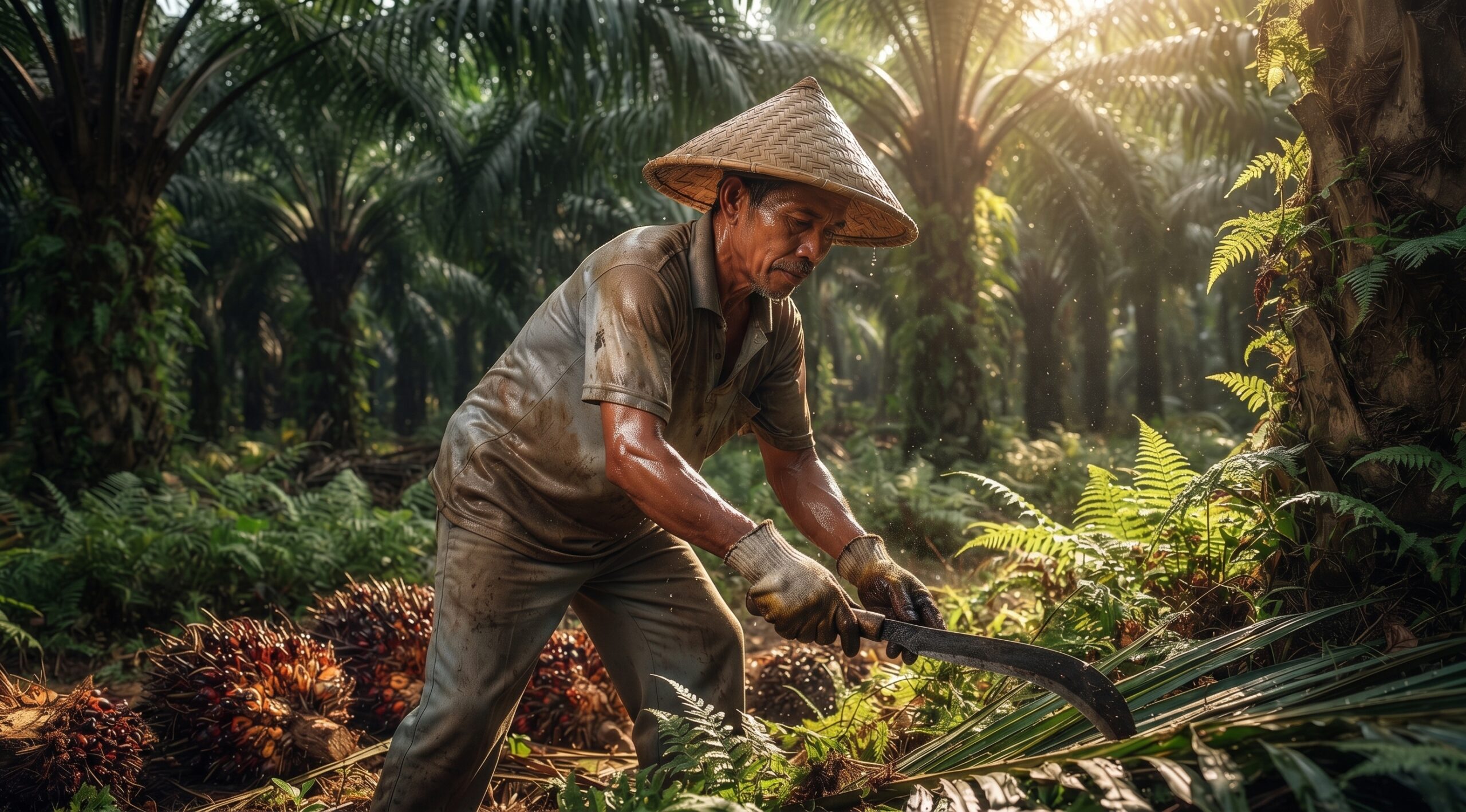
Physically, virgin palm oil carries the visual identity of the fruit itself. A perfectly ripe palm fruit has a deep orange-red flesh (mesocarp), a natural signal from the tree that the fruit is at its peak quality. When extracted correctly, the oil should retain that same vibrant orange-red hue. So, why is the oil in the market yellow? Because in conventional industry, this natural red is deliberately “stripped away” through high-heat bleaching processes to meet market aesthetic standards for clear oil. Ironically, when that physical red vanishes, so does the treasure trove of vitamins.
Gac vs Palm: The Battle of Concentration vs Bio-availability
In the global nutritional hierarchy, the debate over the best source of Vitamin A often highlights the Gac fruit (Momordica cochinchinensis). On paper, Gac indeed boasts a very dense concentration of lycopene and beta-carotene. Yet, why should the Oil Palm remain the “King” of nutrition for mass scalability?
- The Mechanism of Bio-availability: Vitamin A is a lipophilic nutrient, meaning it only dissolves in fat. This is where palm oil holds an absolute advantage: it is a unique fruit that carries its own natural fatty “vehicle”. The Pro-Vitamin A in palm is perfectly dissolved within its fatty acid matrix, allowing it to be instantly absorbed by the human digestive system without needing additional fats during consumption.
- Nutritional Inclusivity through Production Scale: Gac is a seasonal crop that is difficult to process on a mass scale and comes with a prohibitive price tag. Conversely, the oil palm is the most efficient biological engine on Earth, capable of providing consistent nutrition year-round. To address Vitamin A Deficiency (VAD) at a global population level, palm oil offers the most democratic solution, producing massive nutritional volumes on relatively small areas of land.
A Solution is Required: Reclaiming the Right to Nutrition through Intelligent Downstreaming
The practice of discarding nutrition for the sake of a clear yellow appearance is a glaring form of food inefficiency. For decades, the palm industry has been trapped in a “commodity” paradigm, where oil is viewed merely as a frying medium rather than a functional food ingredient.
The world now urgently requires downstream solutions that no longer “punish” the palm fruit with extreme heat. We need a new approach capable of extracting oil while “locking in” nature’s goodness:
- Carotenoid Preservation: Low-temperature refining technologies are needed to ensure that carotenoid levels—15 times higher than in carrots—remain fully intact for the consumer.
- Premium Functional Oil: The future of palm oil is not merely clear yellow oil, but products that reclaim the public’s right to receive intact nutrients.
- National Nutritional Intervention: By preserving the integrity of Vitamins A and E, palm oil has the potential to become a hero in nutritional interventions such as stunting prevention, provided we have the courage to abandon destructive legacy processing methods.
The question is no longer “is palm oil nutritious?”, but rather “are we utilising the technology required to keep that nutrition alive?”
Tags: Palm Fruit, Red palm oil, Vitamin A




 Facebook
 Instagram
 Tiktok
 Linkedin